

Introduction
Technology has changed the way people manage their homes, work, communication, entertainment, and everyday routines. One of the most useful developments in recent years is the growth of smart devices. These devices connect to the internet or communicate with other devices, allowing users to control them automatically, remotely, or through voice commands.
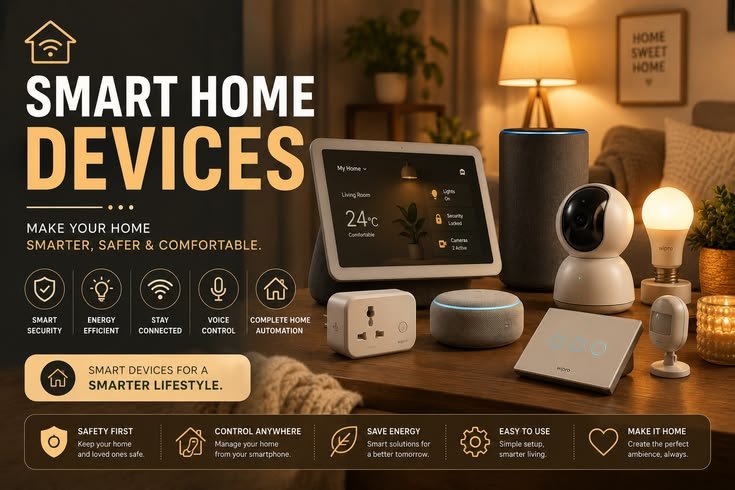
Smart devices are no longer limited to expensive or complicated systems. Many affordable products are now available for ordinary households. Smart bulbs can automate lighting, smart plugs can control appliances, smart speakers can provide voice assistance, and smart security devices can help people monitor their homes.
The biggest advantage of smart technology is convenience. Instead of performing every small task manually, users can automate repetitive activities and control different devices from a smartphone or through simple commands. Smart devices can also improve energy efficiency, security, organization, and accessibility.
What Are Smart Devices?
Smart devices are electronic products that have computing or connectivity features that allow them to perform tasks in more intelligent or automated ways. Many smart devices connect to Wi-Fi, Bluetooth, or another communication network.
A connected device may be controlled through a smartphone application, voice assistant, remote control, or automatic schedule. Some devices can also respond to information collected through sensors.
For example, a traditional light bulb simply turns on when connected to power. A smart bulb can be scheduled to turn on at a particular time, controlled remotely, adjusted for brightness, and sometimes integrated with other smart home devices.
This ability to connect, communicate, and automate is what makes smart devices particularly useful in modern households.
Smart Speakers and Voice Assistants
Smart speakers are among the most recognizable smart devices. They combine speakers with voice-recognition technology and digital assistants.
Users can ask a smart speaker to set reminders, provide general information, play music, create timers, or control compatible smart home devices.
Voice control can be especially convenient when someone is cooking, cleaning, exercising, or performing another activity where using a smartphone is inconvenient.
Smart speakers can also act as a central control point for compatible devices. A user might give a voice command to turn off lights, adjust a thermostat, or activate another connected device.
However, privacy should be considered because voice-enabled devices may process voice commands through online services. Users should review privacy settings and understand how their device handles recorded information.
Smart Lighting
Smart lighting is one of the simplest ways to introduce smart technology into a home. Smart bulbs and switches allow users to control lights through applications, voice commands, schedules, and automation.
People can schedule lights to turn on in the morning or switch off automatically at night. Some smart lighting systems allow users to adjust brightness or create different lighting settings for work, relaxation, or entertainment.
Smart lighting can also be useful when people are away from home. Remote control can allow homeowners to manage lights without physically being present.
Automation may also help reduce unnecessary electricity consumption by ensuring lights are not left running for long periods.
For many households, smart lighting provides an affordable starting point for building a connected home.
Smart Plugs
Smart plugs are small devices that can turn ordinary electrical appliances into connected devices.
A smart plug is placed between an appliance and a power outlet. Depending on the product, users may then control the connected appliance through an application, schedule, or voice command.
For example, a person could schedule a lamp to turn on at a certain time or switch off an appliance automatically.
Smart plugs can be particularly useful for devices that do not need to remain powered continuously. They can help users create simple automation routines without replacing every existing appliance with an expensive smart model.
However, users should always check the electrical ratings of smart plugs and connected appliances to ensure compatibility and safe operation.
Smart Thermostats
Smart thermostats are designed to make heating and cooling systems easier to manage. They can allow users to adjust temperature settings remotely and create automated schedules.
Some advanced thermostats can learn usage patterns and make adjustments based on household routines. This may improve comfort while potentially reducing unnecessary energy use.
For example, a household might create a schedule that uses different temperature settings during working hours, evenings, and sleeping periods.
Remote access can also be convenient. If someone forgets to adjust the thermostat before leaving home, they may be able to change the setting through a smartphone.
The actual benefits depend on the heating and cooling system, household habits, climate, and thermostat configuration.
Smart Home Security Cameras
Security cameras have become more accessible through connected technology. Smart cameras can allow homeowners to monitor specific areas of a property through a smartphone application.
Depending on the device, features may include motion alerts, video recording, night vision, two-way communication, and activity notifications.
A homeowner might receive an alert when movement is detected near an entrance or another monitored area.
Smart doorbell cameras provide another useful option. They can allow users to see visitors and communicate with them remotely.
Security devices should always be configured carefully. Strong passwords, two-factor authentication, software updates, and secure networks can help protect connected cameras from unauthorized access.
Smart Doorbells
Smart doorbells combine traditional doorbell functions with cameras and internet connectivity. When someone approaches the door or presses the doorbell, the device can send an alert to the homeowner’s smartphone.
This can be useful when someone is away from home. Users may be able to see who is at the door and communicate through two-way audio.
Smart doorbells can also provide a record of activity around an entrance, depending on the device and its storage features.
Like other connected security products, smart doorbells involve privacy considerations. Camera placement should respect neighbors and public areas where appropriate, and users should understand how recordings are stored and accessed.
Smart Appliances
Modern appliances are increasingly incorporating smart technology. Connected refrigerators, washing machines, ovens, coffee makers, and other household products can provide remote controls and notifications.
A smart washing machine, for example, may notify a user when a cycle is complete. A connected oven may provide remote monitoring or control features, while some smart refrigerators can provide information about temperature and other conditions.
These features can make household management more convenient.
However, smart appliances can be more expensive than traditional alternatives. Consumers should consider whether the connected features provide meaningful benefits before paying extra for them.
Robot Vacuum Cleaners
Robot vacuum cleaners are designed to automate a common household chore. These devices use sensors and navigation systems to move around rooms and clean floors.
Many modern robot vacuums can be controlled through smartphone applications. Users may create schedules, start cleaning remotely, and sometimes define areas where the robot should or should not operate.
Some advanced models can map rooms and plan cleaning routes more efficiently.
Robot vacuums do not eliminate the need for all household cleaning, but they can reduce the amount of time spent on routine floor maintenance.
They are particularly useful for people who want regular automated cleaning without manually operating a vacuum every day.
Smart Watches and Fitness Devices
Smartwatches and fitness trackers bring smart technology directly to the user. These wearable devices can provide notifications, timers, alarms, activity information, navigation features, and communication tools.
Many models can monitor general activity and provide information about movement and exercise. Some devices also offer additional wellness-related features.
Smartwatches can reduce the need to constantly check a smartphone. Users can quickly view notifications or perform basic actions directly from their wrist.
For people with busy schedules, this can make communication and organization more convenient.
Smart Kitchen Devices
The kitchen is another area where smart technology can save time. Connected coffee makers, kitchen scales, cooking appliances, and timers can assist with routine tasks.
Smart kitchen devices can sometimes be controlled through applications or voice commands. A user may be able to start a compatible appliance, create a schedule, or receive a notification.
Some smart cooking devices can also provide guided instructions or automated settings.
These technologies can be helpful for people who enjoy cooking but want greater convenience and consistency.
Smart Sensors
Small sensors can make a smart home more responsive. Motion sensors, door sensors, temperature sensors, water-leak sensors, and smoke-related devices can provide information about conditions inside or around a home.
Motion sensors can trigger lights or security notifications. Door sensors can alert homeowners when a door opens. Water-leak sensors may provide an early warning about potential leaks.
These devices are often relatively small but can play an important role in home automation and monitoring.
Benefits of Smart Devices
Smart devices can provide several advantages.
Convenience is one of the biggest benefits. Users can control devices remotely and automate repetitive activities.
Time savings are another advantage. Automated cleaning, lighting schedules, reminders, and household routines can reduce manual work.
Energy management can also improve when devices are scheduled to operate only when needed.
Security can benefit from connected cameras, sensors, alarms, and doorbells.
Accessibility is another important area. Voice controls and automated systems can make certain household tasks easier for people who have difficulty operating traditional controls.
Potential Drawbacks
Smart devices are not perfect. One major concern is privacy. Connected products may collect information about users, household routines, device activity, or other behavior.
Security is another concern. Poorly protected devices can potentially become targets for unauthorized access.
Smart devices also depend on electricity and, in many cases, internet connectivity. If a network connection fails, some features may become unavailable.
Cost should also be considered. Buying many smart products can become expensive, especially when cheaper traditional alternatives perform the same basic function.
Consumers should therefore focus on useful features rather than purchasing smart products simply because they are marketed as advanced.
How to Start a Smart Home
People do not need to transform their entire home at once. A better approach is to begin with one or two devices that solve a genuine problem.
Smart bulbs, plugs, speakers, or sensors can be relatively simple starting points. Once users become comfortable with connected technology, they can gradually add more devices.
Compatibility is important. Before purchasing a product, consumers should check whether it works with their existing smartphone, voice assistant, network, and other smart devices.
Security should also be part of the setup from the beginning. Strong passwords, regular updates, secure Wi-Fi, and multi-factor authentication can help protect connected devices.
Final Thoughts
Smart devices are making everyday life more convenient by bringing automation, connectivity, and remote control into homes and personal routines. From smart lighting and plugs to security cameras, robot vacuums, smart speakers, wearable devices, and connected appliances, there are now many ways technology can simplify ordinary tasks.
The best smart devices are not necessarily the most expensive or advanced. A useful device is one that solves a real problem, saves time, improves convenience, or provides meaningful control.
As connected technology continues to develop, smart devices will likely become more integrated and intelligent. By choosing products carefully, protecting personal information, and focusing on practical benefits, users can enjoy the advantages of smart technology while avoiding unnecessary complexity.






Leave a Reply